
What Does “Deepfake” Mean?
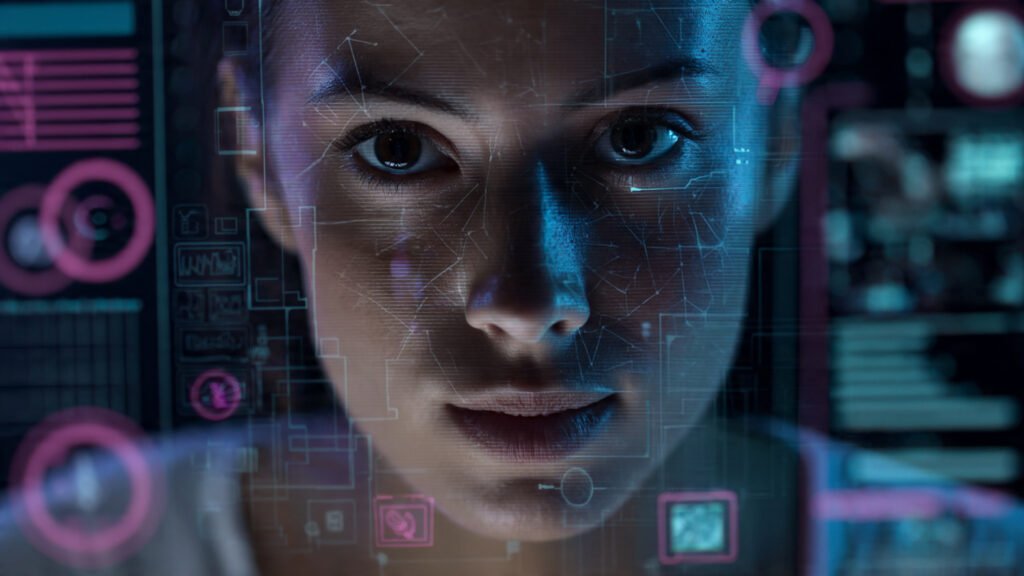
The word deepfake is a combination of two words: learning, which is a part of artificial intelligence and fake. Deepfake refers to pictures, videos or audio where a persons image has been made or changed using artificial intelligence. This is often done to make it look like the person is doing or saying something that they never actually did. Deepfakes are not just changes to a photo. They are made by intelligence systems that have been trained on a lot of real pictures or videos. This training allows the systems to create things that can sometimes trick people into thinking they are real.
It is important to understand what deepfake means not from a technical standpoint but also from a social one. Deepfake technology can be used in different ways from harmless fun, to things that can cause serious harm. This article will look at both the good and the bad uses of deepfake technology.
A Brief History: Where Deepfakes Came From
2017 — The Origin
The term “deepfake” was created in 2017. A Reddit user made it. They used AI to put peoples faces on videos without asking. This was not a test. It was meant to hurt and misuse images from the start. Around the time researchers and hobbyists started using the same tech. They made Generative Adversarial Networks or GANs. They used them for fun and creative things. For example they put Nicolas Cage in movies. They also brought photos to life. Some even made political videos.
People used deepfakes for things. Some used deepfakes to make videos. Others used deepfakes to create content, with deepfakes. GANs helped make deepfakes. People used GANs to make deepfakes. They created videos with GANs and deepfakes.
2018–2020 — Mainstream Awareness
- BuzzFeed published a widely-shared public awareness video (produced with director Jordan Peele) showing a fabricated public figure delivering a false message — explicitly to demonstrate the danger of the technology
- Researchers published the first academic papers on deepfake detection
- Several platforms began updating their content policies in response
2021–2024 — Democratization
People can now make deepfake videos on their smartphones using consumer-grade tools. There are apps like FaceApp and Reface that make it easy. You can also use powerful tools on your computer. This means that anyone can make deepfakes. Because of this there are a lot fake videos and pictures online that were made without peoples permission. Cybersecurity research firms that track media have seen a big increase, in this type of thing. Deepfake generation is a problem because of this.
2025–2026 — The Current Landscape
By 2026 video synthesis quality has gotten much better. Now frame-by-frame artifacts are not a way to detect fake videos anymore. This is because the best models for generating videos have improved a lot.
At the time laws are being made faster. Many countries and U.S. States now have laws that make it a crime to create or share intimate images without someones consent. Video synthesis is getting better and better. These laws, against -consensual synthetic intimate imagery are important. They aim to stop people from misusing video synthesis.
How Does Deepfake Technology Actually Work?
You don’t need a computer science degree to understand the core concept.
Generative Adversarial Networks (GANs) are the foundational technology. A GAN consists of two competing AI systems:
- A Generator that creates synthetic images
- A Discriminator that tries to identify whether an image is real or fake
They train against each other. The generator gets better at fooling the discriminator; the discriminator gets better at spotting fakes. Over many thousands of training cycles, the generator learns to produce highly convincing output.
More recent systems use diffusion models (the same technology behind image generators like Stable Diffusion), which produce even higher-quality outputs with fewer visible artifacts.
To create a face-swap deepfake, the system needs:
- A source identity (the face being inserted) — typically requiring dozens to thousands of reference images
- A target video or image (the body or scene)
- Computing resources to run the synthesis
In 2026, step 3 requires nothing more than a mid-range consumer GPU or a cloud subscription.
The Spectrum of Deepfake Use: From Harmless to Harmful
It is accurate and important to acknowledge that deepfake technology has legitimate, non-harmful applications. Conflating all synthetic media with abuse misrepresents the technology and undermines credible discussion of its genuine harms.
Legitimate Uses
| Application | Description |
|---|---|
| Film production | De-aging actors, recreating deceased performers with estate consent, visual effects |
| Education | Animating historical figures for teaching; accessible video localization |
| Accessibility | Lip-sync dubbing to make content accessible across languages |
| Satire | Clearly labeled political parody and commentary |
| Personal entertainment | Face-swap apps used consensually among friends |
Harmful Uses
| Application | Description |
|---|---|
| Non-consensual intimate imagery | Fabricating sexual images of real people without consent |
| Sextortion | Using fabricated images as leverage for blackmail |
| Political disinformation | Fabricating statements by politicians or public figures |
| Fraud | Impersonating executives in video calls to authorize financial transactions |
| Harassment | Targeting private individuals, often women, with fabricated degrading content |
The harmful category is not theoretical. Each of these use cases is documented, prosecuted, and ongoing.
Non-Consensual Synthetic Imagery: Why It Causes Real Harm
This part is about the bad things that can happen with deepfakes. It is the reason why people’re worried about deepfakes. They are not something that technicians are interested in.
When we talk about -consensual deepfake intimate imagery or NCII for short we are talking about pictures or videos that are made using computers and show people doing sexual things. These pictures or videos use a persons face or body without them knowing about it or saying it is okay. The people who are hurt by this are usually women and girls. They are often normal people who are not famous or, in the public eye. Deepfakes are a problem because of this kind of thing. -Consensual deepfake intimate imagery is a serious issue that affects many people, especially women and girls who are victims of deepfakes.
The documented harms include:
- Psychological trauma — victims report symptoms consistent with sexual abuse, including anxiety, depression, and post-traumatic stress
- Reputational damage — content spreads rapidly and is difficult to remove entirely
- Professional consequences — fabricated content has been used to discredit professionals and academics
- Extortion — perpetrators use threats to distribute content as leverage for money or further abuse
- Chilling effect — targets frequently withdraw from public life, online spaces, or professional activity
Critically, the harm is real regardless of whether any viewer knows the content is synthetic. The act of fabricating and distributing the image without consent is itself the violation.
The Legal Response in 2026
As of 2026, the legislative landscape has shifted significantly from earlier years:
- The EU AI Act includes provisions addressing synthetic media and non-consensual intimate imagery
- The UK Online Safety Act covers NCII including AI-generated content
- Multiple U.S. states have enacted specific statutes; federal legislation has been introduced in Congress
- Several countries in Asia-Pacific, including South Korea and Australia, have updated criminal codes to address synthetic media abuse
Verified fact: Legal frameworks exist and are being enforced. Prosecution has occurred. This is not a legal gray area in most developed jurisdictions as of 2026.
Why Deepfake Detection Is Difficult (And Getting Harder)
We talk about how to find these things in another article. I want to say something about the main problem here.
The people who make deepfakes and the people who try to find them are always trying to be better than each other. When we get better, at finding deepfakes the people who make them use those methods to make their deepfakes harder to find. Some deepfakes that were made in 2025 and 2026 were so good that they fooled experts who were trained to find them.
This is why:
- Technical detection alone is insufficient — context, metadata, and source verification are equally important
- Platform-level detection is necessary at scale — individual users cannot manually verify every piece of media they encounter
- Media literacy — understanding that convincing synthetic media exists — is the first and most durable line of defense
What You Should Do If You Encounter a Deepfake
If you encounter non-consensual synthetic imagery of someone:
- Do not share, save, or redistribute it
- Report it to the platform immediately using the NCII reporting pathway if available
- If you know the subject, inform them — they may be unaware
If you are a target:
- Contact StopNCII.org — a free tool that creates image hashes allowing platforms to detect and remove content without additional human exposure
- Document the content’s location (URLs, timestamps) before reporting
- Contact law enforcement — this is a crime in most jurisdictions
- Seek support from a digital rights organization such as the Cyber Civil Rights Initiative
Common Questions About Deepfake Meaning
Is every AI-generated image a deepfake?
No. The term deepfake specifically refers to synthetic media that uses a real person’s likeness without their consent, or presents a fabricated portrayal as real. Generic AI art is not a deepfake.
Can deepfakes be made of anyone?
Technically, any person with a sufficient number of publicly available photographs can be targeted. Public figures with large online presences are particularly vulnerable because source material is abundant.
Is viewing deepfake content illegal?
This varies by jurisdiction. Distribution and creation of non-consensual intimate synthetic imagery is criminalized in many places. Passive viewing is less clearly addressed by current law, but possession of certain categories of content may carry legal risk depending on local statutes.
Can I tell if a video is a deepfake just by watching it?
Not always. High-quality deepfakes created with 2025–2026 generation tools may not show obvious artifacts. Critical evaluation of source, context, and distribution channel is as important as visual inspection.
Conclusion: Deepfake Meaning in Full
Deepfake is when computers make media that puts a real person in a made up situation. This technology can be used for things like art and business. And it can also be used to hurt people, especially women by making fake pictures and videos of them without their permission.
To really understand what deepfakes are how they are made and why they are bad is the step, to doing something about it. Whether you are just trying to protect yourself or you are someone who checks if pictures and videos are real or you are a person who makes laws.
We should not. Ignore deepfakes. We need to understand them.