
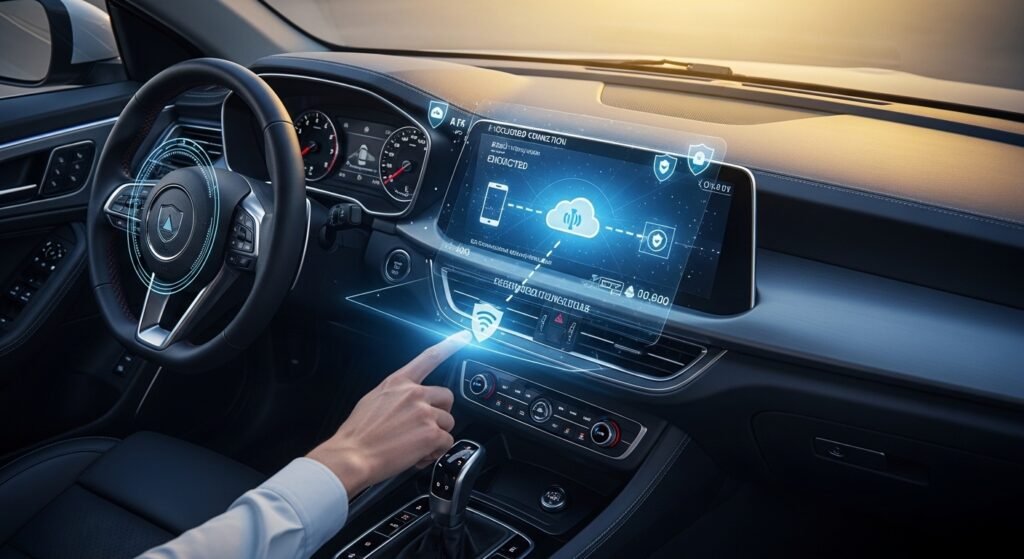
Cars that are smart are not something you see in movies anymore. They are something you see every day. These days cars are like computers on wheels with than 100 tiny computers inside them a huge amount of code and they are always connected to the internet through your phone signal, Wi-Fi, Bluetooth and a special way of talking to other cars and things. You can update your cars software from anywhere use apps on your phone to control your car and even connect your car to your home. All these things make driving an easy and fun experience.
All these connections also make your car a target for bad people who want to hack into it. If someone hacks into your cars entertainment system or the app you use to control your car or even the updates you get for your cars software they can find out where you are get your information or even control your car from far away. There are reports that say there will be more attacks on cars that use artificial intelligence and bad people will work together to hack into cars. There are also rules like ISO/SAE 21434 UN R155 and UN R156 that car companies have to follow to keep cars safe.
If you are buying your smart car or if you are someone who takes care of a lot of cars or if you want to connect your car to your home this guide will help you keep your car and your information safe. You will learn about the things that can happen to smart cars in 2026, how to protect your car step by step what tools you need and what to do to keep your car safe. You will also learn about the ways to do things what mistakes to avoid and how people are using smart cars in real life. If you follow this guide you can enjoy all the things, about smart cars without worrying about your safety, privacy and security. Smart cars are something that you can use every day and smart car integration is something that you can do to make your life easier. Smart car integration is important. This guide will help you with it.
Why Smart Car Security Matters More Than Ever
Cars that are connected and have software are what people buy now. They have things like starting the car from away getting directions, in real time helpers that talk and updates that happen on their own. These things need the internet to work and need to be connected to devices.. This also means that your car can be a way for someone to get into your phone your home computer, your money information and even put you in danger.
Key drivers of risk include:
- Expanded Attack Surface: Bluetooth, Wi-Fi hotspots, USB ports, mobile apps, and V2X all create entry points.
- AI-Powered Threats: Attackers use generative AI for sophisticated phishing, voice cloning, and automated exploits.
- Regulatory Pressure: Standards like ISO/SAE 21434 require lifecycle cybersecurity, while UN R156 mandates secure OTA processes.
- Privacy and Safety Impact: Breaches can expose driving habits, location history, or allow CAN bus manipulation.
For individuals, the stakes involve theft, stalking, or data leaks. For professionals and fleets, they include operational disruption and liability.
The Top Smart Car Integration Threats in 2026
- Mobile App and Account Compromises — Weak passwords or phishing lead to full vehicle control via the manufacturer app.
- Insecure OTA Updates — Malicious updates can be injected if code signing or encryption is weak.
- Wireless Protocol Exploits — Bluetooth pairing attacks, Wi-Fi man-in-the-middle, or V2X spoofing.
- Infotainment and USB Vulnerabilities — Malware delivered via untrusted devices or public charging stations.
- Keyless Entry and Relay Attacks — Though improved, sophisticated relay or signal amplification remains possible.
- Smart Home / Ecosystem Integration — Poor API security when linking car to home automation (garage doors, lights, security systems).
- Supply-Chain and Backend Attacks — Compromised cloud services or third-party components.
- Data Privacy Leaks — Uncontrolled sharing of telemetry, location, or biometric data.
Step-by-Step Guide: Secure Your Smart Car Integration in 2026
Step 1: Choose Vehicles with Strong Cybersecurity Foundations
- Prioritize manufacturers compliant with ISO/SAE 21434 and UN R155/R156.
- Look for features like secure boot, hardware security modules (HSM), and regular OTA transparency.
- Research independent security audits or bug bounty programs before purchase.
Step 2: Secure Your Manufacturer Account and Mobile App
- Use a unique, strong password and enable multi-factor authentication (MFA) — preferably app-based or hardware key, not SMS.
- Review and revoke unnecessary app permissions (location, camera, contacts).
- Enable PIN-to-drive or biometric locks where available.
- Use the official app only; avoid third-party integrations unless verified.
Step 3: Keep All Software and Firmware Updated
- Enable automatic OTA updates and install them promptly (parked, strong signal, not while driving).
- Verify updates via manufacturer notifications — never install from unofficial sources.
- Check for recalls or security bulletins regularly through the app or website.
Step 4: Harden Wireless Connections and Physical Access
- Disable Bluetooth and Wi-Fi when not in use.
- Use only trusted devices for pairing; forget and re-pair periodically.
- For key fobs: Store in a Faraday pouch or signal-blocking bag when not driving (still effective against advanced relay attacks).
- Avoid public USB charging stations — use your own cable or wireless options.
Step 5: Manage Smart Home and Ecosystem Integrations Carefully
- Use official, secure APIs (e.g., Matter-compatible where available) for garage doors, home security, or voice assistants.
- Place the car on a separate IoT/guest network if your home router supports VLANs.
- Review data-sharing settings — limit what the car sends to cloud services or third parties.
- Test integrations in a controlled way and monitor for unexpected behavior.
Step 6: Monitor and Respond to Anomalies
- Enable all manufacturer security alerts (sentry mode, intrusion detection, unusual activity notifications).
- Regularly review app activity logs and connected devices.
- Use your phone’s built-in security features (e.g., app lock, VPN when on public networks) when interacting with the car.
Step 7: Maintain Ongoing Hygiene and Backups
- Perform a full security audit every 3–6 months.
- Document your settings and keep a record of OTA update history.
- For fleets or advanced users: Consider third-party monitoring solutions with intrusion detection.
Best Tools and Features for Smart Car Security in 2026
Built-in Manufacturer Tools:
- Tesla Sentry Mode, PIN-to-Drive, and advanced keyless security.
- BMW, Mercedes, and Audi systems with over-the-air security patches and app-based monitoring.
- Ford, GM, and others with enhanced IDPS (intrusion detection and prevention).
Consumer-Level Enhancements:
- Faraday pouches or signal-blocking key fob cases (still recommended by experts).
- Password managers for all associated accounts.
- VPN on your phone when using car hotspots or public Wi-Fi.
Advanced/Enterprise Options:
- Vehicle-specific cybersecurity apps or dashboards from manufacturers.
- For fleets: Solutions with Security Operations Centers (SOC) and continuous monitoring.
Advanced Techniques for Professionals and Power Users
- Threat Modeling (TARA): Apply basic ISO/SAE 21434 principles — identify assets, threats, and mitigations for your specific vehicle.
- Network Segmentation: If your car supports it (or via home router), isolate the vehicle’s hotspot from other devices.
- Zero-Trust Principles: Verify every connection and limit privileges even within the car’s systems.
- Custom Monitoring: Use manufacturer APIs (where allowed) or third-party tools for deeper telemetry analysis.
- Secure OTA Best Practices: Only connect to trusted networks for updates; verify digital signatures manually if the app allows.
Best Practices That Deliver the Biggest Impact
- Treat your car’s mobile app like your bank account — strong MFA and regular reviews.
- Prioritize secure-by-design vehicles and enable every available security toggle.
- Assume wireless connections are public — minimize exposure.
- Combine manufacturer tools with personal habits (updates, physical security, privacy settings).
- Educate all drivers in your household or fleet.
- Stay informed via official manufacturer channels and trusted automotive cybersecurity sources.
- Test integrations thoroughly before full reliance.
Common Mistakes That Leave Smart Cars Vulnerable
- Using weak or reused passwords for the manufacturer account.
- Ignoring or delaying OTA updates.
- Leaving Bluetooth/Wi-Fi always on.
- Connecting to untrusted USB devices or public chargers.
- Over-sharing data in app privacy settings.
- Assuming the car is “secure by default” without checking settings.
- Integrating with smart home systems without reviewing API permissions.
Real-World Applications and Lessons
People who own things and follow these steps have stopped guys from getting into their accounts and sensitive information. This has kept them from getting hurt by someone who is not supposed to have access to their stuff. Some companies that manage a lot of vehicles are using cars that follow the rules and always keep an eye on things. They say that hardly anyone is able to hack into their systems. Families that connect their cars to their homes can make things easier for themselves without putting their home computers at risk. All of this happens because these people are doing things in a way that is in line, with the principles of ISO/SAE 21434 and what the United Nations says they should do. It is not just because they are lucky.
The Future of Smart Car Security
We can expect to see AI-driven intrusion detection being used more and more. This technology will help keep vehicle-to-everything (V2X) communications. Quantum-resistant cryptography will also play a role in V2X.
- Secure design will still be crucial
- Regular updates will be a must
- Users will need to stay alert
The way homes and vehicles work together will become more standardized. This will be similar to how Matter protocols work. Regulations will keep changing.. Some things will stay the same.
We will see integration of AI-driven intrusion detection. Quantum-resistant cryptography will be used in V2X. Vehicle-home ecosystems will use protocols, like Matter. The fundamentals of security will remain the same. These include design, regular updates and user vigilance.
Conclusion
Securing your car integration is really important and it can be done. You need to think of your car as a computer that is connected to the internet not a way to get around. To get started do these three things: turn on the security for your account with the car company make sure your car gets updates automatically and turn off the wireless things you do not use. If you do these things your smart car will be a lot more secure, in a few days. After a month you will feel really confident when you drive your car.
Your smart car should make your life easier. Give you more freedom, not make you worry about new problems. If you follow these steps you will be able to keep your information safe stay safe on the road and protect your smart car and your peace of mind all while enjoying the benefits of a connected smart car.