Imagine waking up one morning and realizing that a tool on your laptop can write your emails, debug your code, plan your meals, tutor your kids, and even help you process a tough day — all within seconds. That is not science fiction anymore. That is the world ChatGPT helped build.
ChatGPT arrived on the internet on November 30, 2022 and within five days, one million people had already signed up. Within two months, that number exploded to 100 million users. No consumer application in history had ever grown that fast. ChatGPT did not just launch a product — it launched an era.
But here is the thing people often miss. ChatGPT is not a search engine. It is not a calculator. It is a conversational AI partner that understands context, learns from what you say, and responds in natural human language. When you type a question into ChatGPT, you are not getting a list of links. You are getting a thoughtful, articulate answer — as if you asked a brilliant friend who happens to know a little about everything.
ChatGPT is built on a technology called a Large Language Model (LLM). OpenAI, the company behind ChatGPT, trained it on enormous amounts of text data — books, articles, websites, and conversations. Through a process called reinforcement learning from human feedback (RLHF), ChatGPT learned not just to predict words, but to understand intent and give genuinely useful responses.
Today, ChatGPT is used by more than 200 million people every week. Students use ChatGPT to study. Developers use ChatGPT to write code faster. Marketers use ChatGPT to craft campaigns. Entrepreneurs use ChatGPT to brainstorm ideas. And everyday people use ChatGPT simply to make their lives a little easier.
In this guide, we are going to explore ChatGPT from every angle — how it works, why people trust it, what its limitations are, and which best chatgpt alternatives 2026 are worth your attention. Whether you are brand new to AI or already a power user, this article has something meaningful for you.
What Is ChatGPT and Why Is Everyone Talking About It?
ChatGPT is an AI-powered chatbot developed by OpenAI. It uses the GPT (Generative Pre-trained Transformer) architecture to understand and generate human-like text. What makes ChatGPT extraordinary is its ability to hold a multi-turn conversation — remembering what you said earlier and adjusting its responses accordingly.
Unlike older chatbots that followed rigid scripts, ChatGPT is dynamic. You can ask it to write a cover letter, then say “make it more casual,” and ChatGPT will instantly revise it — without you having to start over. That kind of fluid, responsive intelligence is what set ChatGPT apart from everything that came before it.
The technology behind ChatGPT was not born overnight. OpenAI spent years training progressively smarter models — GPT-1, GPT-2, GPT-3 — before releasing the version of ChatGPT that captured the world’s imagination. Each generation learned from the last, and each became dramatically more capable.
The Incredible Story Behind ChatGPT’s Meteoric Rise to Fame
Every great story has a beginning, and the story of ChatGPT starts with a group of researchers who believed artificial intelligence could be made safe and beneficial. OpenAI was founded in 2015 by a team that included Sam Altman and Elon Musk, among others. Their mission was bold: ensure that AI benefits all of humanity.
ChatGPT was their breakthrough moment. When it launched in late 2022, people were genuinely stunned. Writers used ChatGPT to cure writer’s block. Teachers used ChatGPT to create lesson plans in minutes. Programmers found that ChatGPT could explain error messages, suggest fixes, and even write working functions from scratch.
The media coverage was relentless. Tech journalists called ChatGPT a revolution. Critics raised concerns about misinformation and academic dishonesty. Philosophers debated what it meant for human creativity. But through all the noise, one thing was clear: ChatGPT had changed the conversation — literally.
How ChatGPT Actually Works — The Smart Science Made Simple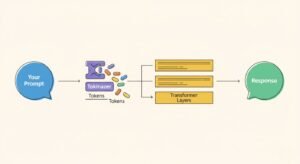
You do not need a computer science degree to understand how ChatGPT works. Think of it this way: ChatGPT is a very sophisticated pattern-matching system that has read an enormous portion of human writing and learned how language flows.
When you type a message, ChatGPT breaks it down into smaller units called tokens. It then predicts — based on everything it has learned — what the most helpful, coherent, and accurate response would be. It does this billions of times per second, generating one word at a time until a complete response is formed.
What makes ChatGPT smarter than just autocomplete is the reinforcement learning layer. Human trainers evaluated thousands of responses during training, rating which ones were more helpful, honest, and harmless. ChatGPT internalized those preferences and uses them to shape every answer it generates.
The current flagship version, ChatGPT-4o (launched in 2024), can also process images and voice input — making ChatGPT a multimodal AI. You can show it a photo and ask what is in it. You can speak to it and it speaks back. The boundaries of what ChatGPT can do keep expanding.
7 Powerful Ways ChatGPT Is Transforming Everyday Life Right Now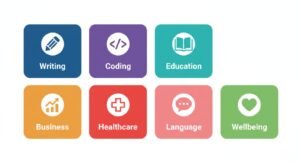
ChatGPT is not just a novelty — it is actively reshaping how people work, learn, and create. Here are seven meaningful ways ChatGPT is making a difference:
1. Writing and Content Creation — ChatGPT drafts emails, blog posts, product descriptions, and social media captions in seconds. It does not replace creativity; it amplifies it.
2. Coding and Software Development — Developers use ChatGPT to write boilerplate code, debug errors, explain documentation, and even generate entire functions. ChatGPT has become a trusted pair programmer.
3. Education and Tutoring — Students worldwide use ChatGPT as a patient, always-available tutor. ChatGPT explains complex concepts in plain language and adjusts its explanations based on your level.
4. Business Strategy and Brainstorming — Entrepreneurs ask ChatGPT to analyze markets, generate business names, draft pitch decks, and identify potential risks. ChatGPT functions as an on-demand strategic advisor.
5. Healthcare Information — While ChatGPT is not a substitute for a doctor, it helps people understand medical terminology, symptoms, and treatment options so they can have more informed conversations with healthcare providers.
6. Language Learning — ChatGPT is an incredible language tutor. You can practice conversations in Spanish, French, Mandarin, or Arabic — and ChatGPT will correct your grammar with kindness and precision.
7. Mental Wellbeing and Journaling — Many people find ChatGPT helpful as a reflective writing partner. While it is not a therapist, ChatGPT can help you organize your thoughts and explore your feelings in a safe, non-judgmental space.
Why Millions of Brilliant People Trust ChatGPT Every Single Day
Trust is not given freely — it is earned. ChatGPT has earned trust by consistently delivering quality, accuracy, and usefulness across an extraordinary range of tasks. Professionals in law, medicine, finance, engineering, and the arts all rely on ChatGPT as a starting point for research and idea generation.
OpenAI has also invested heavily in safety. ChatGPT is designed to decline requests that could cause harm, acknowledge uncertainty rather than fabricate answers, and provide balanced perspectives on controversial topics. These design choices reflect OpenAI’s commitment to responsible AI development.
The trust in ChatGPT is also backed by transparency. OpenAI publishes research papers, system cards, and usage policies. When ChatGPT makes a mistake — and it does make mistakes — OpenAI acknowledges it and works to improve the model. That accountability builds lasting credibility.
The Absolute Best ChatGPT Alternatives 2026 Worth Exploring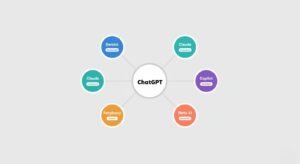
While ChatGPT remains the market leader, the AI landscape in 2026 is rich with powerful competitors. Knowing the best chatgpt alternatives 2026 has available gives you flexibility, especially as different tools excel in different areas.
Google Gemini is deeply integrated with Google’s ecosystem — ideal for users who live inside Google Docs, Gmail, and Search. Gemini Ultra rivals ChatGPT in reasoning and factual accuracy.
Claude by Anthropic is widely praised for its nuanced, thoughtful responses. Claude has a longer context window than many competitors, making it excellent for analyzing lengthy documents and maintaining complex conversations.
Microsoft Copilot (powered by OpenAI technology) is built directly into Windows 11, Microsoft 365, and Bing. If you work in the Microsoft ecosystem daily, Copilot delivers ChatGPT-level intelligence right inside your workflow.
Meta AI (Llama-powered) is integrated into WhatsApp, Instagram, and Facebook — making it one of the most accessible AI assistants on the planet, especially for social and casual use.
Perplexity AI positions itself as an AI-powered search engine. It cites its sources in real time, making it a strong choice for research-focused users who want verifiable information alongside conversational AI answers.
Each of these alternatives offers genuine value. The best choice depends entirely on your specific needs, your existing tools, and how you prefer to work with AI.
Remarkable Free ChatGPT Alternatives 2026 That Cost You Nothing
Budget should never be a barrier to accessing powerful AI. The free chatgpt alternatives 2026 landscape is surprisingly strong — and these tools deliver real, impressive results without charging a cent.
Google Gemini (Free Tier) — Gemini’s free version is powerful, fast, and deeply integrated with Google Search. It is an excellent daily-use AI for writing, research, and questions.
Claude (Free Tier by Anthropic) — Claude’s free version gives you access to one of the most thoughtful AI models available. It is especially strong for writing, analysis, and long-form tasks.
Microsoft Copilot (Free) — Copilot is completely free for personal use and available through any web browser. It uses OpenAI’s technology and delivers ChatGPT-grade responses at no cost.
Perplexity AI (Free) — The free version of Perplexity answers questions with cited, real-time web sources — making it one of the most trustworthy free AI tools for research.
Meta AI (Free) — Built into apps you already use, Meta AI is completely free and available right inside WhatsApp, Instagram Messenger, and Facebook. Zero setup required.
HuggingChat (Free, Open Source) — For the privacy-conscious user, HuggingChat offers open-source AI models you can use without creating an account. Your data stays yours.
These free chatgpt alternatives 2026 tools prove that intelligence is no longer a luxury. Access to powerful AI has been democratized — and that is genuinely exciting.
ChatGPT vs. The Competition — An Honest and Fearless Comparison
Let us be direct: ChatGPT is still the most versatile, widely used, and capable general-purpose AI assistant available today. But “best overall” does not mean “best for everything.”
In creative writing, ChatGPT and Claude are neck-and-neck — both produce vivid, engaging content. In coding, ChatGPT-4o and GitHub Copilot (also OpenAI-powered) are the industry standard. In research with citations, Perplexity AI pulls ahead. In system integration for enterprises, Microsoft Copilot offers unmatched depth within the Microsoft stack.
Where ChatGPT truly shines is adaptability. No other AI handles the sheer breadth of use cases — from writing poetry to analyzing legal contracts to helping you decide what to cook for dinner — with the same fluency and reliability that ChatGPT delivers day in and day out.
Brilliant Pro Tips to Get the Most Out of ChatGPT Like an Expert
Using ChatGPT well is a skill — and like any skill, it improves with practice. Here are proven strategies to unlock ChatGPT’s full potential:
Be specific with your prompts. Instead of asking “help me write an email,” say “write a professional follow-up email to a potential client who attended my webinar on digital marketing last Tuesday.” ChatGPT responds to specificity with precision.
Assign a role. Start your prompt with “You are an experienced copywriter” or “You are a data scientist.” ChatGPT adopts that persona and calibrates its responses accordingly.
Iterate relentlessly. ChatGPT’s first response is rarely its best. Say “make it shorter,” “add more data,” or “rewrite this in a more conversational tone” — and watch it improve in real time.
Use it for thinking, not just doing. Ask ChatGPT to challenge your assumptions, play devil’s advocate, or identify weaknesses in your argument. Some of ChatGPT’s most valuable responses come when you ask it to think critically with you.
Save your best prompts. When you find a prompt that consistently delivers excellent results, save it. Building a personal prompt library makes ChatGPT dramatically more efficient over time.
The Real Limitations of ChatGPT You Should Honestly Know
Transparency matters — and any honest discussion of ChatGPT must address its limitations. ChatGPT is not infallible. It can confidently state incorrect information, a phenomenon called “hallucination.” This happens because ChatGPT generates plausible-sounding text, not guaranteed-accurate facts.
ChatGPT’s training data has a knowledge cutoff. Events that occurred after that date may not be reflected in its responses — unless you use a version with web browsing capability, like ChatGPT with browsing enabled.
ChatGPT also lacks true understanding. It processes patterns in language brilliantly, but it does not “know” things the way humans do. It does not have lived experiences, genuine emotions, or subjective awareness.
These are not fatal flaws — they are important context. Use ChatGPT as a powerful assistant and thinking partner, not as an infallible oracle. Always verify critical information through primary sources.
Is ChatGPT Safe? Everything You Urgently Need to Know About Privacy
Privacy is a legitimate concern with any AI tool, and ChatGPT is no exception. OpenAI collects and uses conversation data to improve its models by default. However, users can opt out of this data collection in ChatGPT’s settings — a meaningful transparency feature that most competitors do not offer.
ChatGPT does not share your personal conversations with third parties for advertising purposes. OpenAI’s business model is subscription and API-based, not advertising-based — which reduces the incentive to monetize your data indirectly.
For enterprise users, ChatGPT for Business and the OpenAI API offer data processing agreements with stronger privacy guarantees. Businesses handling sensitive information should always use these enterprise-tier options.
The bottom line on safety: ChatGPT is as safe as the information you choose to share with it. Avoid inputting genuinely sensitive data — financial account numbers, passwords, confidential business information — into any AI tool, including ChatGPT.
Frequently Asked Questions About ChatGPT
Q1: Is ChatGPT free to use? Yes. ChatGPT offers a robust free tier that gives you access to GPT-4o mini and limited access to GPT-4o. The paid ChatGPT Plus plan ($20/month) unlocks priority access, higher usage limits, and advanced features.
Q2: What is the difference between ChatGPT and GPT-4? GPT-4 is the underlying AI model. ChatGPT is the conversational product built on top of it. Think of GPT-4 as the engine and ChatGPT as the car you actually drive.
Q3: Can ChatGPT browse the internet? Yes — but only with the browsing feature enabled. ChatGPT Plus and Team users can activate real-time web browsing, allowing ChatGPT to access and summarize current information from the web.
Q4: Is ChatGPT good for students? Absolutely. ChatGPT is an outstanding study partner. It explains difficult concepts clearly, quizzes you, helps with essay outlines, and provides examples on demand. Used responsibly — to learn, not to cheat — ChatGPT is enormously beneficial for students.
Q5: What are the best ChatGPT alternatives in 2026? The strongest ChatGPT alternatives in 2026 include Google Gemini, Claude by Anthropic, Microsoft Copilot, Perplexity AI, and Meta AI. Each excels in different areas, so the best choice depends on your specific use case.
Q6: Can ChatGPT write code? Yes, and it does so impressively well. ChatGPT can write, explain, debug, and optimize code in dozens of programming languages including Python, JavaScript, Java, C++, SQL, and more.
Q7: Does ChatGPT remember previous conversations? By default, ChatGPT does not carry memory between separate conversations. However, the Memory feature (available to ChatGPT Plus users) allows ChatGPT to remember key facts about you across sessions.
Q8: Is ChatGPT safe for children? OpenAI’s terms of service require users to be at least 13 years old, with parental consent required for users under 18. Parents should supervise younger users and use ChatGPT’s safety settings appropriately.
Q9: How accurate is ChatGPT? ChatGPT is highly accurate on well-established topics with abundant training data. It is less reliable on very recent events, highly specialized domains, or complex numerical reasoning. Always verify critical information independently.
Q10: What is the future of ChatGPT? The future of ChatGPT is deeply exciting. OpenAI continues to release more capable, multimodal, and agentic versions of ChatGPT — models that can take actions on your behalf, not just provide information. Voice interfaces, deeper integrations, and reasoning improvements are all actively in development.
Final Thoughts — ChatGPT Has Already Changed the World
Here is the truth that no one can argue with: ChatGPT did not just launch a product. It permanently altered humanity’s relationship with intelligence itself. Before ChatGPT, expert-level knowledge was gated behind expensive consultants, years of education, and access to the right networks. ChatGPT democratized that knowledge — putting a thoughtful, capable, always-available assistant in the hands of anyone with an internet connection.
The best chatgpt alternatives 2026 offers are genuinely impressive. Free tools like Claude, Gemini, and Copilot mean that quality AI is available to everyone, regardless of budget. And with each passing month, these tools get smarter, safer, and more integrated into the fabric of daily life.
Whether you use ChatGPT for work, learning, creativity, or just satisfying your curiosity — you are participating in one of the most significant technological shifts in human history. And the remarkable thing is: we are still in the early chapters of this story.
Embrace it. Explore it. Use it wisely. The future is conversational — and ChatGPT is leading the way.